
[cmsms_row][cmsms_column data_width=”1/1″][cmsms_text]
Dental treatment of younger and older patients or anxious adolescents is a real challenge for pediatric dentistry.
Ordinary psychological management techniques are not always sufficient and/or adequate to obtain the child’s cooperation, and professional care aimed only at pain control must be consolidated with human compassion for the patient who is afraid, anxious, or deficient of any kind.
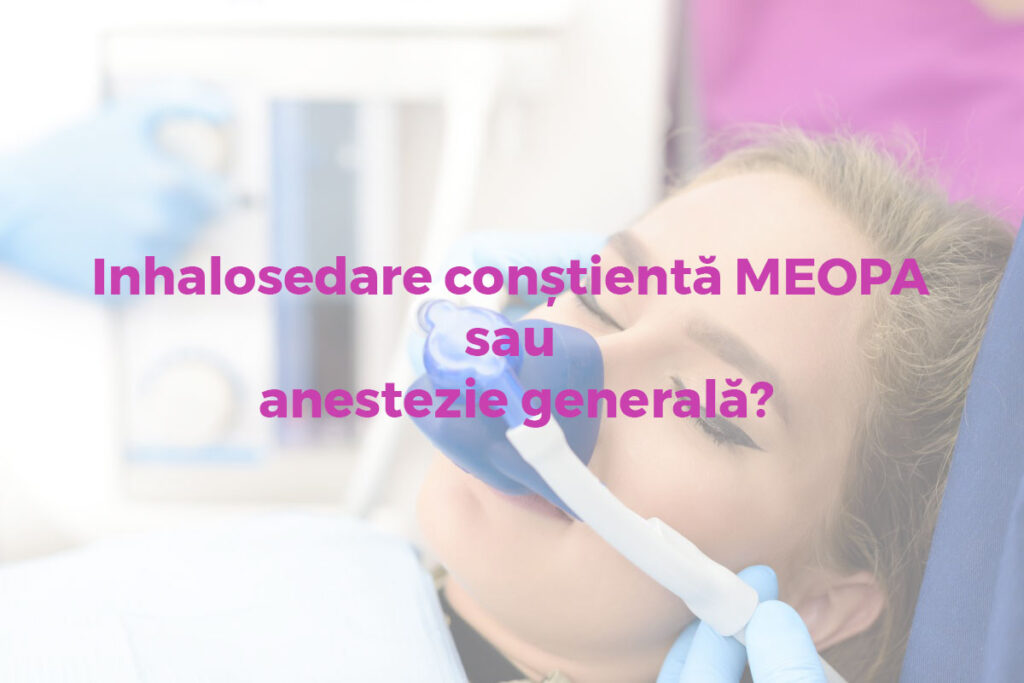
What do you choose between general anesthesia and conscious inhalation?
Before resorting to general anesthesia, a well-defined category of patients (uncooperative for various reasons or cooperative, but requiring invasive interventions with anxiogenic potential) resort to pharmacological solutions (independent or in combination with psychological ones) for conscious sedation.
Conscious sedation can be obtained in many ways: inhaled, orally, intravenous, etc. (see tab. 1.1. describing the advantages and disadvantages of each one in particular).
 Table.1.1. Comparative description of routes of administration for conscious sedation using Nitric protoxide – MEOPA – in Europe, according to Luis de Leon (2010) [129] is the second best method among parents’ preferences, according to the Tell-Show-Do method.
Other studies [JM 2007, Belgium], [Annie Berthet, 2006], [Jacobs et al., 2003], [Meechan et al., 1988], cited by Luis de Leon, confirm the invaluable MEOPA inhalation technique in pediatric dentistry.
The French conscious inhalation technique MEOPA meets all the conditions of an ideal sedation technique.
Therefore, before deciding on general anesthesia, take note of conscious inhalation – the French MEOPA method!
[/cmsms_text][/cmsms_column][/cmsms_row]